
Age: 63
male
David Koepp (/kɛp/; born June 9, 1963) is an American screenwriter and director. He is the ninth most successful screenwriter of all time in terms of U.S. box office receipts, with a total gross of over $2.3 billion. Koepp has achieved both critical and commercial success in a wide variety of genres: thriller, science fiction, comedy, action, drama, crime, superhero, horror, adventure, and fantasy. Some of the best-known films he has written include the sci-fi adventure films Jurassic Park (1993), The Lost World: Jurassic Park (1997), and Indiana Jones and the Kingdom of the Crystal Skull (2008); the crime film Carlito's Way (1993); the action spy films Mission: Impossible (1996) and Jack Ryan: Shadow Recruit (2014); the superhero film Spider-Man (2002); the sci-fi disaster film War of the Worlds (2005); and the mystery thriller Angels & Demons (2009). Koepp has directed seven feature films over the course of his career: The Trigger Effect (1996), Stir of Echoes (1999), Secret Window (2004), Ghost Town (2008), Premium Rush (2012), Mortdecai (2015), and You Should Have Left (2020). Description above from the Wikipedia article David Koepp, licensed under CC-BY-SA, full list of contributors on Wikipedia.
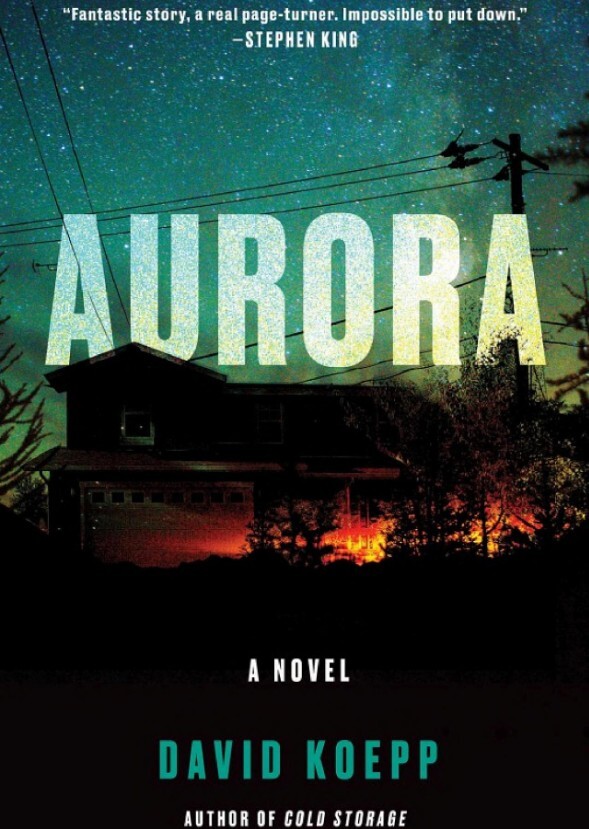
In Aurora, Illinois, Aubrey Wheeler is just trying to get by after her semi-criminal ex-husband split, leaving behind his unruly teenage son. Then the lights go out—not just in Aurora but across the globe. A solar storm has knocked out power almost everywhere. Suddenly, all problems are local, very local, and Aubrey must assume the mantle of fierce protector of her suburban neighborhood. Across the country lives Aubrey’s estranged brother, Thom. A fantastically wealthy, neurotically over-prepared Silicon Valley CEO, he plans to ride out the crisis in a gilded desert bunker he built for maximum comfort and security. But the complicated history between the siblings is far from over, and what feels like the end of the world is just the beginning of several long-overdue reckonings—which not everyone will survive . . . Aurora is suspenseful storytelling—both large scale and small—at its finest.


