Died at 105
male
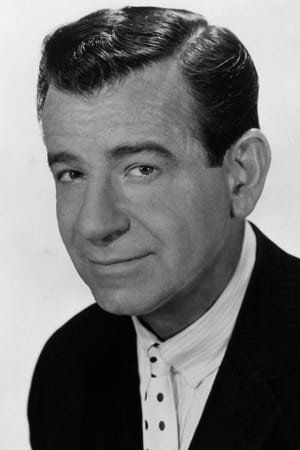
Walter Matthau (born Walter John Matthow; October 1, 1920 – July 1, 2000) was an American actor, comedian and film director. He is best known for his film roles in A Face in the Crowd (1957), King Creole (1958) and as a coach of a hapless little league team in the baseball comedy The Bad News Bears (1976). He also starred in 10 films alongside Jack Lemmon, including The Odd Couple (1968), The Front Page (1974) and Grumpy Old Men (1993). Matthau won the Academy Award for Best Supporting Actor for his performance in the Billy Wilder film The Fortune Cookie (1966). Matthau is also known for his performances in Stanley Donen's romance Charade (1963), Gene Kelly's musical Hello, Dolly! (1969), Elaine May's screwball comedy A New Leaf (1971) and Herbert Ross' ensemble comedy California Suite (1978). He also starred in Plaza Suite, Kotch (both 1971), Charley Varrick (1973), The Sunshine Boys (1975), and Hopscotch (1980). On Broadway, Matthau originated the role of Oscar Madison in The Odd Couple by playwright Neil Simon, for which he received a Tony Award for Best Actor in a Play in 1965, his second after A Shot in the Dark in 1962. Matthau also received two British Academy Film Awards and a Golden Globe Award. In 1963, he received a Primetime Emmy Award nomination for his performance in The DuPont Show of the Week. In 1982, he received a star on the Hollywood Walk of Fame.
Walter Matthau

Television Host
for Television Host in Asteroid City (1970s Edition)
Suggested by Jeshisthename

Asteroid City is a 2023 American comedy-drama film written, directed, and produced by Wes Anderson, from a story he wrote with Roman Coppola. The film features an ensemble cast that includes Jason Schwartzman, Scarlett Johansson, Tom Hanks, Jeffrey Wright, Tilda Swinton, Bryan Cranston, Edward Norton, Adrien Brody, Liev Schreiber, Hope Davis, Steve Park, Rupert Friend, Maya Hawke, Steve Carell, Matt Dillon, Hong Chau, Willem Dafoe, Margot Robbie, Tony Revolori, Jake Ryan, and Jeff Goldblum. Its metatextual plot simultaneously depicts the events of a Junior Stargazer convention in a retrofuturistic version of 1955, staged as a play, and the creation of the play.[6] It is Anderson's homage to popular memory and mythology about extraterrestrials and UFOs witnessed in the Southwestern desert in close proximity to atomic test sites during the postwar period of the American 20th century.

