
Age: 36
female
Danielle Brooks is an American actress whose work spans television, film, and Broadway. She first gained widespread recognition as Tasha “Taystee” Jefferson on Orange Is the New Black (2013–2019), a role that became one of the series’ emotional centers and established her as a major presence on television. She later reached a broader mainstream audience starring as Leota Adebayo in James Gunn’s HBO series Peacemaker, where her performance played a central role in the show’s balance of action, satire, and character-driven storytelling. The series marked a high-profile expansion of her work into genre television tied to DC Comics. Brooks made her Broadway debut in 2015 as Sofia in the revival of The Color Purple, earning a Tony Award nomination and winning a Grammy Award with the cast. She reprised the role in the 2023 film adaptation, a performance that brought her nominations from the Academy Awards, BAFTA, and Golden Globes, solidifying her transition into major film roles. Alongside acting, Brooks has taken on producing and hosting work. She portrayed Mahalia Jackson in the television biopic Robin Roberts Presents: Mahalia (2021), serving as an executive producer and earning a Primetime Emmy nomination. She later hosted Netflix’s Instant Dream Home, receiving a Daytime Emmy nomination for her work as a program host. Brooks has continued to balance screen and stage appearances, returning to Broadway in August Wilson’s The Piano Lesson and starring in the fantasy adventure comedy A Minecraft Movie, further expanding her range across genres.
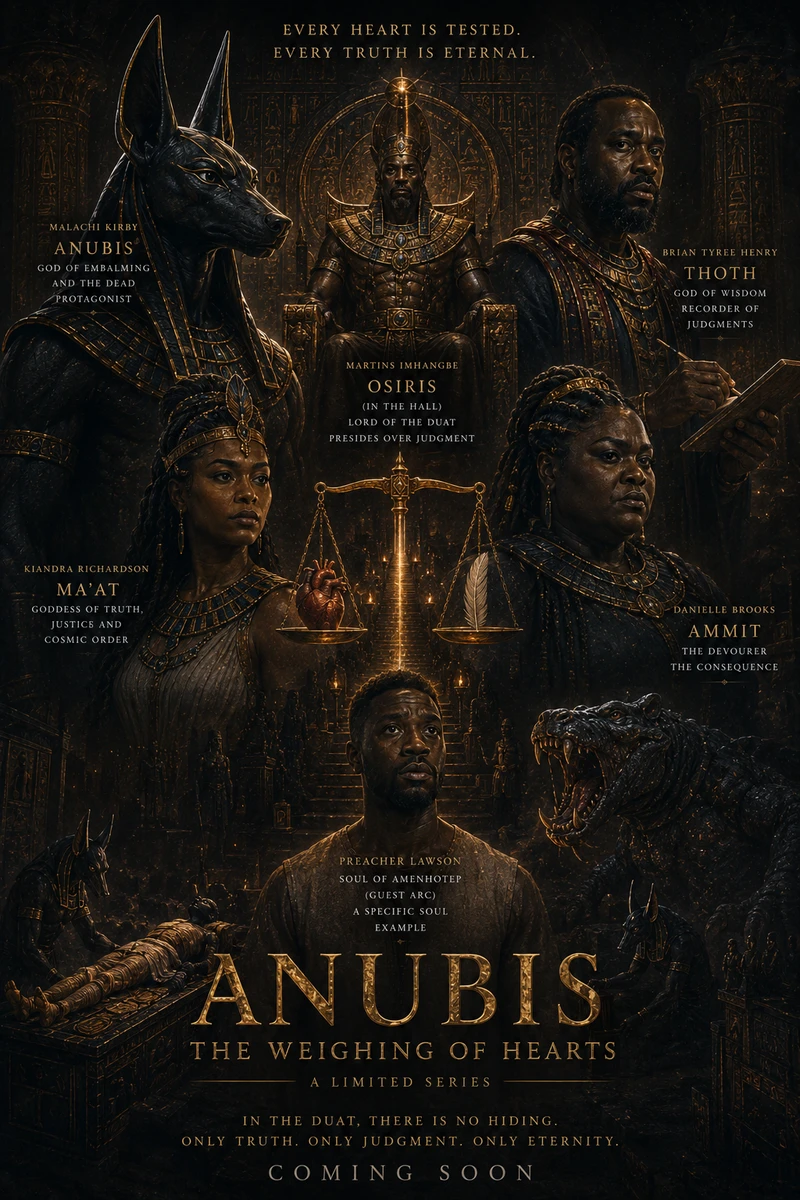
The definitive portrait of Anubis — the Egyptian deity most misrepresented by popular culture as menacing, when the actual mythological tradition gives us a god of extraordinary gentleness, precision, and care. Anubis guards the process of mummification (which he invented to protect Osiris's body and extended to all humanity as a gift), guides the dead through the Duat, and weighs each heart against the feather of Ma'at in the Hall of Two Truths. The series shows a single divine year in Anubis's governance: the souls he receives, the hearts he weighs, the care he takes with each individual judgment. Guest arcs include historically significant Egyptian figures and mythological mortals. The series' most important formal decision: every soul Anubis receives is treated as a specific individual whose life mattered. He does not process the dead in bulk. He gives each person the attention their life deserves.


