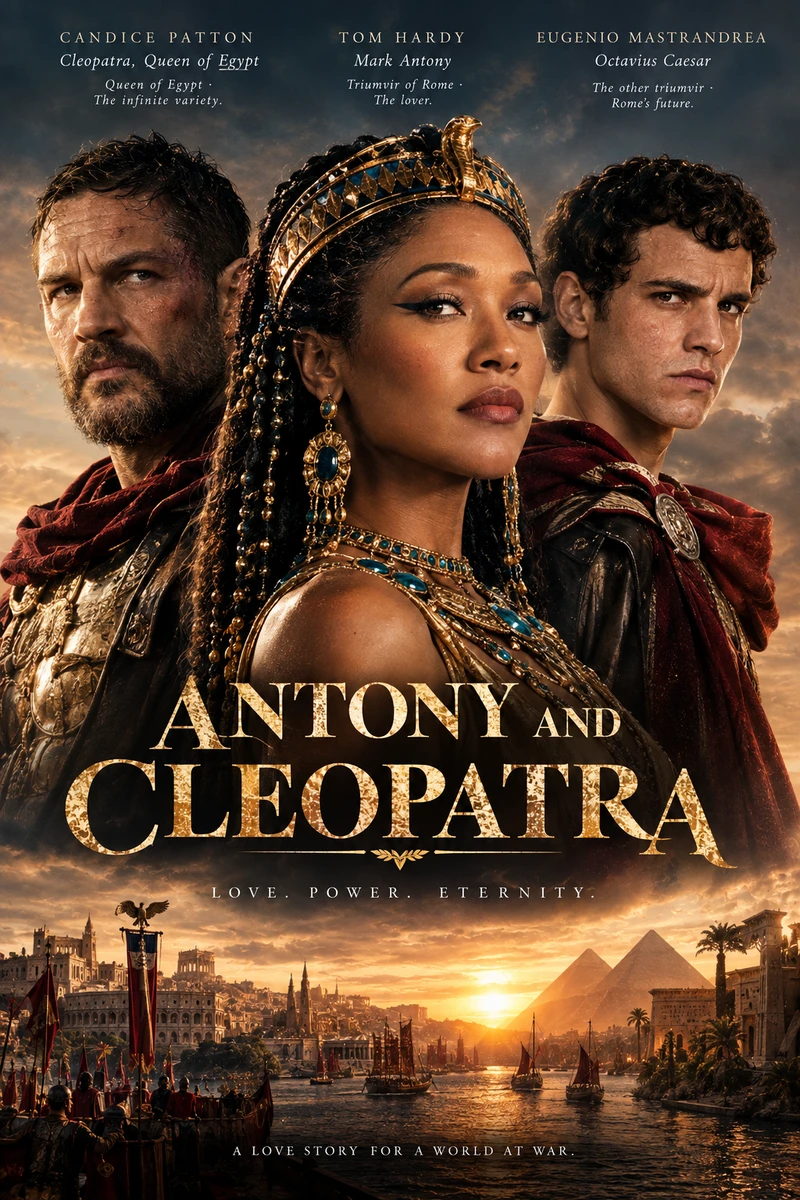
He was the most powerful man in the world. She was the most extraordinary woman in it. Together they chose love over empire. History called it their defeat. Shakespeare called it something else. The most visually sumptuous film in the collection — set across the full visual contrast of Republican Rome (marble, severity, military order) and Ptolemaic Egypt (gold, heat, the specific overwhelming sensory world of Alexandria). Antony and Cleopatra is Shakespeare's most mature love tragedy — the story of two middle-aged people who are each extraordinary in their own world and who choose each other over everything else. The film treats their relationship with full complexity: it is real, it is political, it is strategic, it is also the most genuine thing either of them has ever experienced. Cleopatra's theatrical manipulation of Antony is not simply manipulation — it is the specific language of a woman who has never been allowed to be direct about anything she wants. Antony's abandonment of Roman duty is not simply weakness — it is the specific choice of someone who has finally found something worth more than empire.
Act One — Alexandria
Egypt in full. Cleopatra and Antony's world. The news from Rome. The specific luxury of a civilization that knows it is being absorbed.
Act Two — Rome
The marriage to Octavia. Antony's specific quality of being diminished by Rome's severity. The return to Egypt.
Act Three — The Battle
Actium. Cleopatra's ships withdrawing. Antony following. The military disaster and its aftermath.
Act Four — The Monument
Antony's death — mismanaged, painful, human. Cleopatra's death — chosen, precise, queenly. The asps. 'I am fire and air.' The ending that Shakespeare gives them instead of history's defeat.