
Age: 63
male
Ralph Nathaniel Twisleton-Wykeham-Fiennes (born 22 December 1962) is an British-American actor, film producer, and director. He has received various accolades, including a British Academy Film Award and a Tony Award, as well as nominations for three Academy Awards, seven Golden Globe Awards, and a Primetime Emmy Award. Born in Ipswich, Suffolk, Fiennes was trained at and graduated from the Royal Academy of Dramatic Art in 1985. A Shakespeare interpreter, he excelled onstage at the Royal National Theatre before succeeding at the Royal Shakespeare Company. In 1995, Fiennes made his Broadway debut playing Prince Hamlet in the revival of the William Shakespeare play Hamlet, for which he won the Tony Award for Best Actor in a Play. He was later Tony-nominated for his role as a travelling faith healer in the Brian Friel play Faith Healer (2006). Fiennes made his film debut playing Heathcliff in Emily Brontë's Wuthering Heights (1992). He has earned three Academy Award nominations for his performances in the films Schindler's List (1993), The English Patient (1996), and Conclave (2024). He has also acted in Quiz Show (1994), Maid in Manhattan (2002), The Constant Gardener (2005), In Bruges (2008), The Reader (2008), The Duchess (2008), The Hurt Locker (2009), The Grand Budapest Hotel (2014), A Bigger Splash (2015), Hail, Caesar! (2016), and The Menu (2022). Fiennes gained wider recognition for playing Lord Voldemort in the Harry Potter film series (2005–2011) and Gareth Mallory / M in the James Bond films (2012–2021); and has voiced roles in the animated films The Prince of Egypt (1998), Wallace & Gromit: The Curse of the Were-Rabbit (2005), Kubo and the Two Strings (2016), and The Lego Batman Movie (2017). He directed and starred in the films Coriolanus (2011) and The Invisible Woman (2013). Aside from acting, Fiennes has been an ambassador for UNICEF UK since 1999.
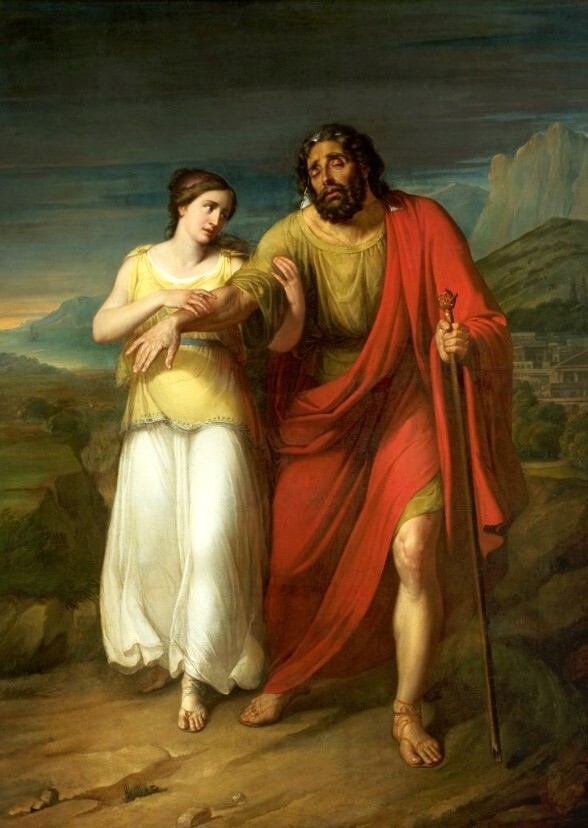
Antigone, a tragedy by Sophocles, centers on the defiant daughter of Oedipus, the former king of Thebes. After a brutal civil war in which her brothers Eteocles and Polyneices kill each other, King Creon ascends the throne and declares that Eteocles, who defended the city, will be honored with a proper burial, while Polyneices, who attacked it, is to be left unburied as a traitor. Antigone, driven by loyalty to divine law and familial duty, defies Creon's decree and buries her brother. Her act of rebellion sets off a tragic chain of events. Creon, stubborn and unyielding, sentences her to death, despite pleas from his son Haemon, who is also Antigone’s fiancé. The gods and the prophet Tiresias warn of the consequences, but Creon realizes his error too late. Antigone dies, followed by Haemon and then Creon's wife, Eurydice, leaving Creon alone, broken by the loss brought on by his own pride. The play is a powerful exploration of justice, loyalty, and the consequences of absolute power.


