
Age: 47
male
Christopher Michael Pratt (born 21 June 1979) is an American actor, known for starring in both television and action films. He rose to prominence for his television roles, particularly in the NBC sitcom Parks and Recreation (2009–2015), for which he received critical acclaim and was nominated for the Critics' Choice Television Award for Best Supporting Actor in a Comedy Series in 2013. He also starred earlier in his career as Bright Abbott in The WB drama series Everwood (2002–2006) and had roles in Wanted (2008), Jennifer's Body (2009), Moneyball (2011), The Five-Year Engagement (2012), Zero Dark Thirty (2013), Delivery Man (2013), and Her (2013). Pratt achieved leading man status in 2014, starring in two critically and commercially successful films: The Lego Movie as Emmet Brickowski, and Marvel Studios' Guardians of the Galaxy as Star-Lord. He starred in Jurassic World (2015) and Jurassic World: Fallen Kingdom (2018), and he reprised his Marvel role in Guardians of the Galaxy Vol. 2 (2017), Avengers: Infinity War (2018), Avengers: Endgame (2019), and the planned Guardians of the Galaxy Vol. 3. Meanwhile, in 2016 he was part of an ensemble cast in The Magnificent Seven and the male lead in Passengers. Description above is from the Wikipedia article Chris Pratt, licensed under CC-BY-SA, full list of contributors on Wikipedia.
Chris Pratt
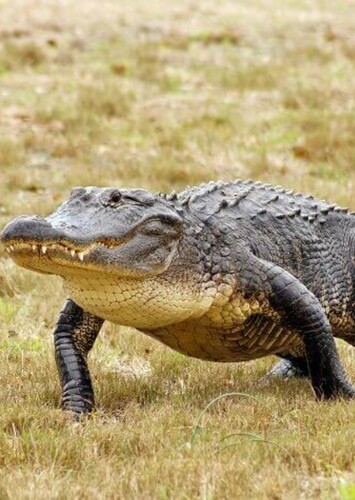
American Alligator
for American Alligator in Animal Kingdom (Television Series)
Suggested by user_182335
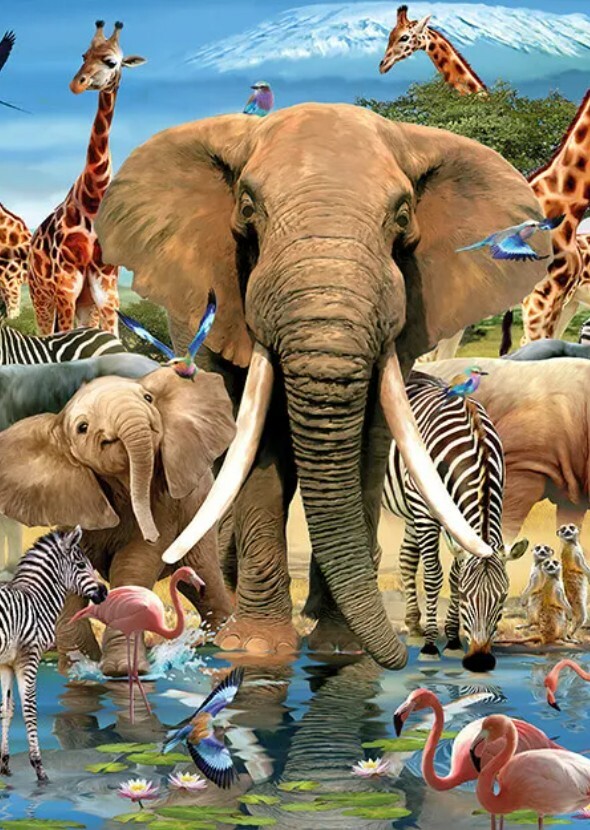
Most living animal species belong to the infrakingdom Bilateria, a highly proliferative clade whose members have a bilaterally symmetric body plan. Extant bilaterians include the basal group Xenacoelomorpha, but the vast majority belong to two large superphyla: the protostomes, which include phyla such as arthropods, molluscs, flatworms, annelids and nematodes, etc.; and the deuterostomes, which include the three phyla echinoderms, hemichordates and chordates, the latter with the vertebrates being its most successful subphylum. Precambrian life forms interpreted as early complex animals were already present in the Ediacaran biota of the late Proterozoic, but fossils of primitive sponge and other speculative early animals have been dated to as early as the Tonian period. Nearly all modern animal phyla became clearly established in the fossil record as marine species during the Cambrian explosion, which began around 539 million years ago (Mya), and most classes during the Ordovician radiation 485.4 Mya. 6,331 groups of genes common to all living animals have been identified; these may have arisen from a single common ancestor that lived 650 Mya during the Cryogenian period.

