
Age: 68
male
Giancarlo Giuseppe Alessandro Esposito (born April 26, 1958) is an American actor. He is known for portraying Gus Fring in the AMC crime drama series Breaking Bad from 2009 to 2011 and its prequel series Better Call Saul from 2017 to 2022. He won the Critics' Choice Television Award for Best Supporting Actor in a Drama Series twice for this role. He earned three nominations for the Primetime Emmy Award for Outstanding Supporting Actor in a Drama Series. His other television roles include federal agent Mike Giardello in the NBC series Homicide: Life on the Street (1998–1999), Sidney Glass / Magic Mirror in the ABC fantasy series Once Upon a Time (2011–2017), Tom Neville in the NBC series Revolution (2012–2014), Dr. Edward Ruskins in the Netflix series Dear White People (2017–2021), Stan Edgar in the Amazon series The Boys (2019–present) and The Boys Presents: Diabolical (2022), and Moff Gideon in the Disney+ series The Mandalorian (2019–2023), the lattermost of which earned him two Primetime Emmy Award nominations. He also portrayed Adam Clayton Powell Jr. in the MGM+ series Godfather of Harlem (2019–present), acted in the HBO drama series Westworld (2016), and starred in the Netflix television series Kaleidoscope (2023), The Gentlemen (2024), and The Residence (2025). He is also known for his collaboration with Spike Lee, acting in several of his films, such as School Daze (1988), Do the Right Thing (1989), Mo' Better Blues (1990), and Malcolm X (1992). His other major films include Taps (1981), King of New York (1990), Bob Roberts (1992), Fresh (1994), The Usual Suspects (1995), Ali (2001), Monkeybone (2001), Last Holiday (2006), Rabbit Hole (2010), Okja (2017), Megalopolis (2024), MaXXXine (2024), and Captain America: Brave New World (2025). He voiced Akela in the live-action remake of The Jungle Book (2016). Description above from the Wikipedia article Giancarlo Esposito, licensed under CC-BY-SA, full list of contributors on Wikipedia.
Giancarlo Esposito
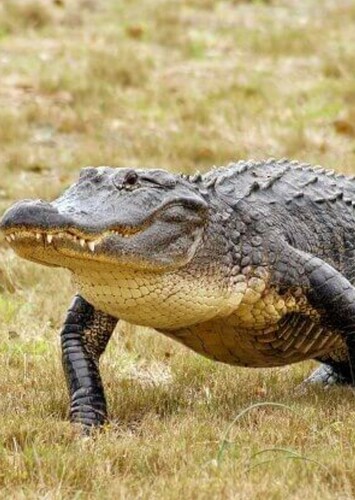
American Alligator
for American Alligator in Animal Kingdom
Suggested by user_281043
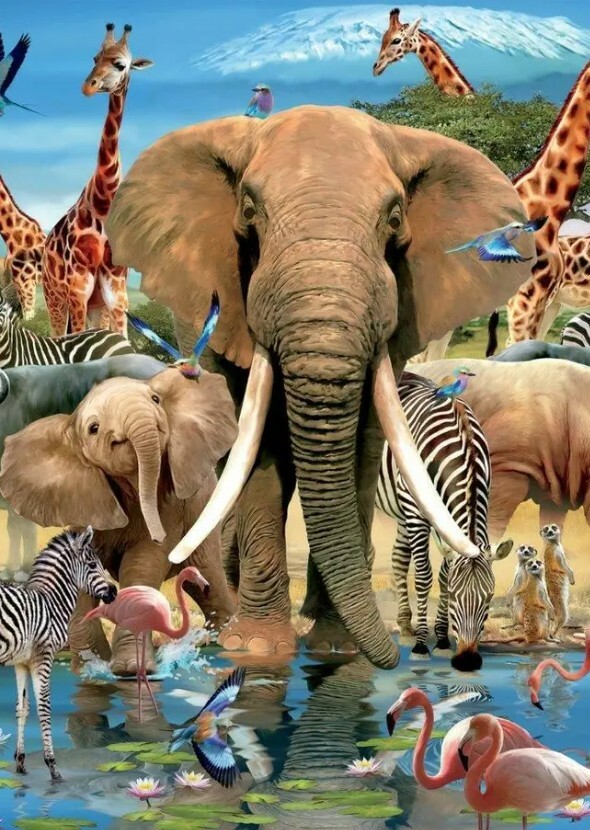
Most living animal species belong to the infrakingdom Bilateria, a highly proliferative clade whose members have a bilaterally symmetric body plan. Extant bilaterians include the basal group Xenacoelomorpha, but the vast majority belong to two large superphyla: the protostomes, which include phyla such as arthropods, molluscs, flatworms, annelids and nematodes, etc.; and the deuterostomes, which include the three phyla echinoderms, hemichordates and chordates, the latter with the vertebrates being its most successful subphylum. Precambrian life forms interpreted as early complex animals were already present in the Ediacaran biota of the late Proterozoic, but fossils of primitive sponge and other speculative early animals have been dated to as early as the Tonian period. Nearly all modern animal phyla became clearly established in the fossil record as marine species during the Cambrian explosion, which began around 539 million years ago (Mya), and most classes during the Ordovician radiation 485.4 Mya. 6,331 groups of genes common to all living animals have been identified; these may have arisen from a single common ancestor that lived 650 Mya during the Cryogenian period.

