Age: 52
male
Adam Copeland is a Canadian professional wrestler and actor currently signed to All Elite Wrestling (AEW). He previously wrestled for World Wrestling Entertainment (WWE) for more than two decades under the ring name Edge, becoming one of the most decorated and influential performers in company history. Copeland made his professional wrestling debut in 1992 and spent his early years working across the independent circuit, competing in both singles and tag team competition, most notably alongside his longtime friend Christian Cage. He signed with the World Wrestling Federation (WWF) in 1997 and debuted on television in 1998 as Edge. After winning the WWF Intercontinental Championship in 1999, he reunited with Christian to form one of the most successful tag teams of their era, winning the World Tag Team Championship seven times and becoming closely associated with the rise of Tables, Ladders, and Chairs matches. After transitioning to singles competition in 2001, Copeland established himself as a top main-event star, ultimately winning a total of 31 championships in WWE, including seven World Heavyweight Championships and four WWE Championships. He became WWE’s 14th Triple Crown Champion and seventh Grand Slam Champion, while also achieving the rare distinction of winning King of the Ring, Money in the Bank, and the Royal Rumble. He retired from in-ring competition in 2011 due to severe neck injuries and was inducted into the WWE Hall of Fame in 2012. Copeland returned to active competition in 2020 and continued wrestling at a high level until his departure from WWE in 2023. Copeland debuted for AEW in October 2023, where he renewed his rivalry and alliance with Christian Cage and has since won the AEW TNT Championship on two occasions. Outside of wrestling, Copeland has appeared in films including Highlander: Endgame and Bending the Rules, and held recurring television roles on Haven and Vikings, along with guest appearances across multiple game shows and scripted series.
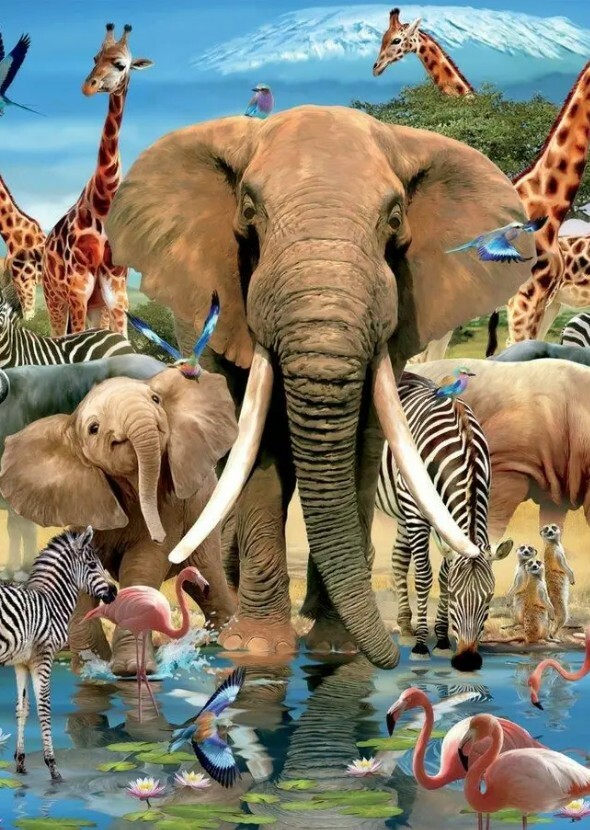
Most living animal species belong to the infrakingdom Bilateria, a highly proliferative clade whose members have a bilaterally symmetric body plan. Extant bilaterians include the basal group Xenacoelomorpha, but the vast majority belong to two large superphyla: the protostomes, which include phyla such as arthropods, molluscs, flatworms, annelids and nematodes, etc.; and the deuterostomes, which include the three phyla echinoderms, hemichordates and chordates, the latter with the vertebrates being its most successful subphylum. Precambrian life forms interpreted as early complex animals were already present in the Ediacaran biota of the late Proterozoic, but fossils of primitive sponge and other speculative early animals have been dated to as early as the Tonian period. Nearly all modern animal phyla became clearly established in the fossil record as marine species during the Cambrian explosion, which began around 539 million years ago (Mya), and most classes during the Ordovician radiation 485.4 Mya. 6,331 groups of genes common to all living animals have been identified; these may have arisen from a single common ancestor that lived 650 Mya during the Cryogenian period.