Age: 23
female
Olivia Isabel Rodrigo (born February 20, 2003) is an American singer-songwriter and actress. She began her career as a child, appearing in commercials and the direct-to-video film An American Girl: Grace Stirs Up Success (2015). She rose to prominence for her leading roles in the Disney Channel series Bizaardvark (2016–2019) and the Disney+ series High School Musical: The Musical: The Series (2019–2022). Shifting focus onto her recording career, Rodrigo signed with Geffen Records to release her 2021 single "Drivers License", which peaked at number one on the US Billboard Hot 100 for eight consecutive weeks and raised her to international prominence. That same year, she released her debut studio album, Sour, which spawned her second number-one song "Good 4 U" and the similarly successful singles "Deja Vu", "Traitor", and "Brutal". The documentary Olivia Rodrigo: Driving Home 2 U, which chronicles the creative process of Sour, was released the following year. In 2023, Rodrigo released her second studio album, Guts, supported by her third number-one song "Vampire" and the singles "Bad Idea Right?" and "Get Him Back!" Rodrigo has earned three Billboard Hot 100 number-one singles, two US Billboard 200 number-one albums, and eight songs with multi-platinum certifications from the Recording Industry Association of America (RIAA). Her accolades include three Grammy Awards, four MTV Video Music Awards, and seven Billboard Music Awards. She was recognized as Time's Entertainer of the Year in 2021, Billboard's Woman of the Year in 2022, and twice as ASCAP's Pop Music Songwriter of the Year in 2022 and 2024. Description above from the Wikipedia article Olivia Rodrigo, licensed under CC-BY-SA, full list of contributors on Wikipedia.
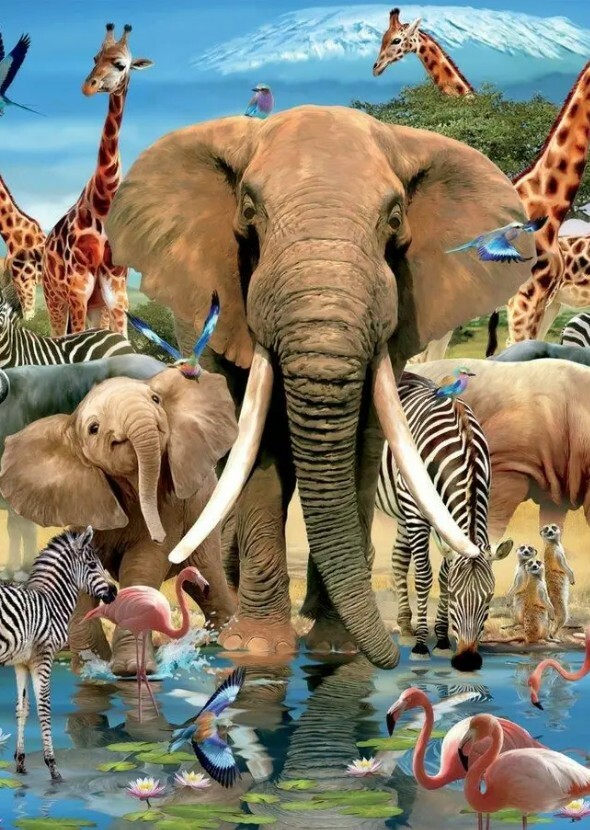
Most living animal species belong to the infrakingdom Bilateria, a highly proliferative clade whose members have a bilaterally symmetric body plan. Extant bilaterians include the basal group Xenacoelomorpha, but the vast majority belong to two large superphyla: the protostomes, which include phyla such as arthropods, molluscs, flatworms, annelids and nematodes, etc.; and the deuterostomes, which include the three phyla echinoderms, hemichordates and chordates, the latter with the vertebrates being its most successful subphylum. Precambrian life forms interpreted as early complex animals were already present in the Ediacaran biota of the late Proterozoic, but fossils of primitive sponge and other speculative early animals have been dated to as early as the Tonian period. Nearly all modern animal phyla became clearly established in the fossil record as marine species during the Cambrian explosion, which began around 539 million years ago (Mya), and most classes during the Ordovician radiation 485.4 Mya. 6,331 groups of genes common to all living animals have been identified; these may have arisen from a single common ancestor that lived 650 Mya during the Cryogenian period.