Age: 64
male
David Andrew Leo Fincher (born August 28, 1962) is an American film director. His films, mostly thrillers, have received 40 nominations at the Academy Awards, including three for him as Best Director. Born in Denver, Colorado, Fincher was interested in filmmaking at an early age. He directed numerous music videos, most notably Madonna's "Express Yourself" in 1989 and "Vogue" in 1990, both of which won him the MTV Video Music Award for Best Direction. He made his feature film debut with Alien 3 (1992), which garnered mixed reviews, followed by the thriller Seven (1995), which was better received. Fincher found lukewarm success with The Game (1997) and Fight Club (1999), but the latter eventually became a cult classic. In 2002, he returned to prominence with the thriller Panic Room starring Jodie Foster. Fincher also directed Zodiac (2007), The Social Network (2010), The Girl with the Dragon Tattoo (2011), and Mank (2020). For The Social Network, he won the Golden Globe Award for Best Director and BAFTA Award for Best Direction. His biggest commercial successes are The Curious Case of Benjamin Button (2008) and Gone Girl (2014), both of which grossed more than $300 million worldwide, with the former earning thirteen nominations at the Academy Awards, and eleven at the British Academy Film Awards. He also served as an executive producer and director for the Netflix series House of Cards (2013–2018) and Mindhunter (2017–2019), winning the Primetime Emmy Award for Outstanding Directing for a Drama Series for the pilot episode of House of Cards. Fincher was the co-founder of Propaganda Films, a film, and music.
David Fincher

Director
for Director in American Psycho (2025)
Suggested by ismokemidblunts
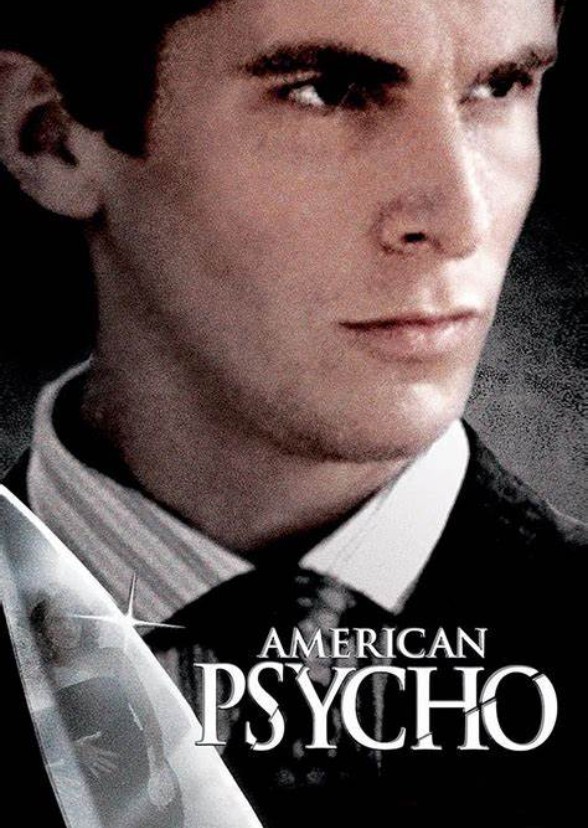
American Psycho is the story of Patrick Bateman, a rich, arrogant, twenty-something yuppie in 1980’s New York, who also happens to be an insane serial killer. He is the quintessential citizen of consumer society who consumes the victims of his insanity, all with the same disengaged obsession he uses in choosing outfits. There is no real plot, no consistent time line, rather it is told as a series of events from Bateman’s point of view. Furthermore there is no real character development; Bateman does not seem to see his “friends” or acquaintances as people, instead he observes them as objects. He does not describe those he comes across by their physical characteristics or their personalities, but rather by what they are wearing and who designed it. At times these descriptions can get downright tedious, but I believe that this is the way Bateman perceives everything… as blatantly boring.