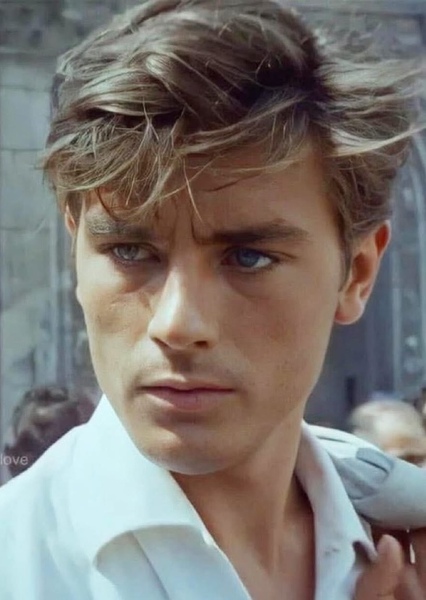
Died at 90
male
Alain Fabien Maurice Marcel Delon (8 November 1935 – 18 August 2024) was a French actor, film producer, screenwriter, singer, and businessman. Acknowledged as a cultural and cinematic leading man of the 20th century, Delon emerged as one of the foremost European actors of the late 1950s to the 1980s, and became an international sex symbol. He is regarded as one of the most well-known figures of the French cultural landscape. His style, looks, and roles, which made him an international icon, earned him enduring popularity. Delon achieved critical acclaim for his roles in films such as Women Are Weak (1959), Purple Noon (1960), Rocco and His Brothers (1960), L'Eclisse (1962), The Leopard (1963), Any Number Can Win (1963), The Black Tulip (1964), The Last Adventure (1967), Le Samouraï (1967), The Girl on a Motorcycle (1968), La Piscine (1969), Le Cercle Rouge (1970), Un flic (1972), and Monsieur Klein (1976). Over the course of his career, Delon worked with many directors, including Luchino Visconti, Jean-Luc Godard, Jean-Pierre Melville, Michelangelo Antonioni, Louis Malle, and Agnès Varda. Delon received many film and entertainment awards throughout his career. In 1985, he won the César Award for Best Actor for his performance in Notre histoire (1984). In 1991, he became a member of France's Legion of Honour. At the 45th Berlin International Film Festival, he won the Honorary Golden Bear. At the 2019 Cannes Film Festival, he received the Honorary Palme d'Or. In addition to his acting career, Delon also recorded the spoken part in the popular 1973 song "Paroles, paroles", a duet with Dalida as the main singing voice. He acquired Swiss citizenship in 1999. Description above from the Wikipedia article Alain Delon, licensed under CC-BY-SA, full list of contributors on Wikipedia.
Alain Delon

Etienne LeBlanc
for Etienne LeBlanc in All the Light We Cannot See
Suggested by paulellmaker
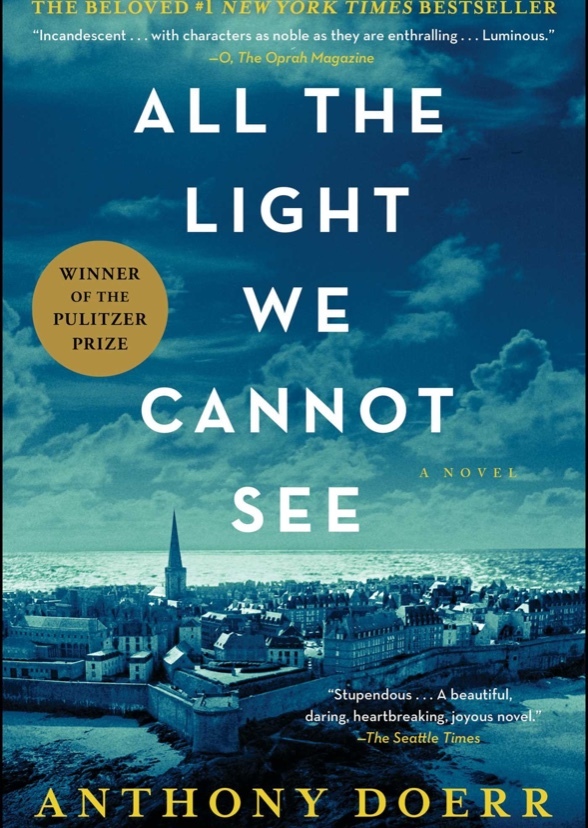
Marie-Laure Leblanc lives with her father in Paris near the Museum of Natural History, where he works as a locksmith. When she is 12, the Nazis occupy Paris and father and daughter flee to the walled citadel of Saint-Malo, where Marie-Laure’s reclusive great-uncle lives in a tall house by the sea. With them they carry what might be the museum’s most valuable & dangerous jewel: The Sea of Flames. In a mining town in Germany, Werner Pfennig, an orphan, grows up with his younger sister, Jutta, enchanted by a crude radio they find that brings them news and stories from places they have never seen or imagined. Werner becomes an expert at building & fixing these crucial new radios & is enlisted to use his talent to track down the French resistance. Marie-Laurie & Werner, from warring countries, both having lost many of the people they loved, come together in Saint-Malo, as Doerr illuminates the ways, against all odds, people try to be good to one another.

