
Age: 58
male
Michael Stuhlbarg (/ˈstuːlˌbɑːrɡ/ STOOL-barg; born July 5, 1968) is an American actor. He is known as a character actor, having portrayed a variety of roles in film, television, and theatre. He has received several awards, including nominations for two Primetime Emmy Awards, two Tony Awards, and a Golden Globe Award. He rose to prominence as troubled university professor Larry Gopnik in the 2009 dark comedy film A Serious Man, directed by Joel and Ethan Coen. Stuhlbarg has since become known as a character actor and has appeared in numerous films and television series portraying real-life figures, such as George Yeaman in Lincoln (2012), Lew Wasserman in Hitchcock (2012), Andy Hertzfeld in Steve Jobs (2015), Edward G. Robinson in Trumbo (2015), Abe Rosenthal in The Post (2017), and Stanley Edgar Hyman in Shirley (2020). His other supporting roles include Hugo (2011), Men in Black 3 (2012), Blue Jasmine (2013), Pawn Sacrifice (2014), Arrival (2016), Call Me by Your Name and The Shape of Water (both 2017), and Bones and All (2022). He joined the Marvel Cinematic Universe, appearing as Nicodemus West in Doctor Strange (2016) and Doctor Strange in the Multiverse of Madness (2022). On television, he portrayed Arnold Rothstein in HBO's Boardwalk Empire (2010–2013), Richard A. Clarke in The Looming Tower (2018), and Richard Sackler in Dopesick (2021), receiving Primetime Emmy Award for Outstanding Supporting Actor in a Limited or Anthology Series or Movie nominations for the latter two. He also acted in FX's Fargo (2017), Showtime's Your Honour (2020–2023), and HBO's The Staircase (2022). On stage, Stuhlbarg has acted in numerous productions, including the 2005 debut of Martin McDonagh's The Pillowman on Broadway, for which he won a Drama Desk Award and received a Tony Award nomination. He returned to Broadway playing Boris Berezovsky in Peter Morgan's Patriots (2024) and received a second Tony Award nomination for Best Actor in a Play. Description above from the Wikipedia article Michael Stuhlbarg, licensed under CC-BY-SA, full list of contributors on Wikipedia.
Michael Stuhlbarg

David Kohn
for David Kohn in A Holy Land Love Story
Suggested by detectivecinematics
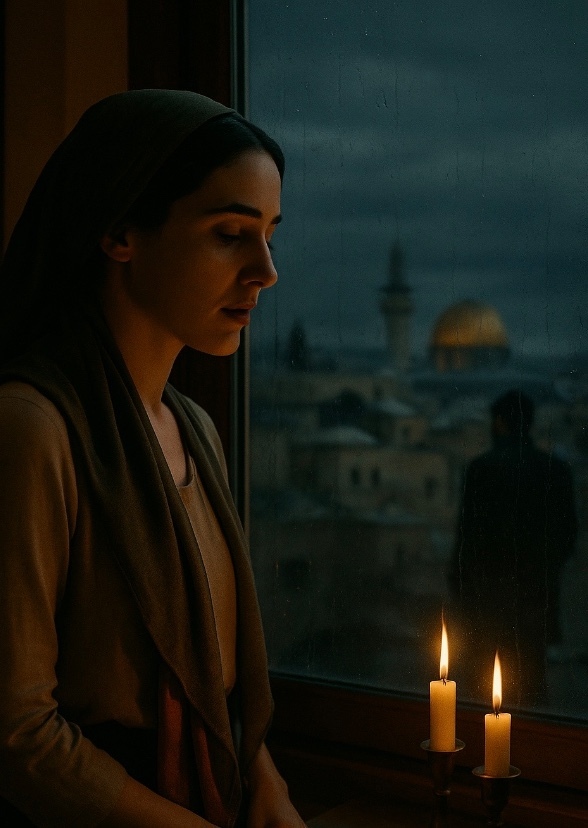
Leah Stein lived in a quiet apartment in Rehavia, a part of Jerusalem where church bells and calls to prayer folded into each other. Every Friday evening she lit two Shabbat candles, their flames trembling against the glass. Her partner, Daniel Kohn, a gentle medical researcher, would bless the wine with calm precision. Their lives ran on order—measured, polite, predictable. Yet behind Leah’s composure lived a silence that was no longer peace. At a heritage conference she met Yusef Rahman, an Arab architect restoring homes in the Old City. Their first talk was about design, but his manner—direct, listening, patient—disarmed her. He said, “We keep rebuilding walls, never foundations.” She laughed, yet the phrase followed her home. They began meeting for coffee, then for walks through narrow alleys where history pressed close. With Yusef she felt visible again. She could speak about literature, doubt, and loneliness without caution. What began as conversation became a quiet attachment, growing in the spaces Daniel’s kindness could not reach. Daniel noticed but said nothing. His answer to unease was gentleness: more patience, more small gestures. Leah met this tenderness with guilt, yet guilt did not lessen the pull she felt toward Yusef. During a storm one evening, reviewing his translation notes by candlelight, she realized the boundary had already been crossed—not in action but in understanding. When he looked at her, it was as if he recognized the part of her that she had kept buried under correctness. After that night, Leah lived divided. With Daniel she kept routines—morning coffee, news headlines, small jokes. With Yusef she walked the streets in anonymity, suspended between belief and betrayal. There was no passion to justify it, no rebellion to romanticize it—only the deep, frightening sense of being known. She told herself it was temporary, but the truth had already rooted itself quietly. Daniel discovered the affair by intuition. One evening he found an email—an architectural sketch signed “see you by the walls.” He did not confront her with anger. He simply asked, “When you speak with him, do you feel more yourself?” Leah said nothing. Silence confirmed what words would only wound further. Two weeks later Daniel left for a research post in Switzerland. His departure was calm, almost polite; he kissed her forehead like a farewell to a former life. Leah stood in the empty apartment, surrounded by order, and felt the unbearable freedom of someone who has broken something beyond repair. Her meetings with Yusef continued but lost their innocence. Without secrecy, they felt exposed. The city itself seemed to turn against them—neighbors’ glances, unspoken rumors, the weight of identities that history had already declared incompatible. What had felt liberating began to feel like exile. One evening, sitting on her mother’s balcony in Haifa, Leah listened to the sea and confessed nothing. Her mother, without knowing the story, said softly, “Love doesn’t keep you safe. It keeps you honest.” That night Leah wrote Yusef: I need to stop building in borrowed space. She never sent it, but she never saw him again. Months passed. Leah poured her restlessness into work, writing a book about literature and divided cities. Critics praised its clarity; she felt only fatigue. Daniel sent postcards—brief, kind, distant. Yusef’s name appeared in an architectural journal, credited for a restoration award. The world moved forward with quiet efficiency, leaving her to navigate the ruins of her choices. A year later, they met by chance at a conference in Tel Aviv. He smiled, older around the eyes. She said, “I still think about foundations.” He answered, “And I still think about light.” They parted without promise or regret—two lives that had intersected precisely once in honesty. That evening, back in Jerusalem, Leah lit the candles alone. The room filled with amber light and its twin reflection in the window. Beyond the glass, the city spread in shadow: domes, rooftops, and the faint echo of the muezzin’s call. Rain traced slow paths down the pane, dividing reflection from reality. She stood motionless, watching the candles burn lower until only one remained. In its last, trembling glow she understood what had driven everything—not passion, not rebellion, but the human need to be seen completely, even if only for a moment. When the flame died, she whispered into the darkness: Some distances are not meant to be crossed. They are meant to be understood.

