Age: 49
male
Andrew Scott (born 21 October 1976) is an Irish actor. Known for his roles on stage and screen, his accolades include a British Academy Television Award, Silver Bear Berlin International Film Festival, and two Laurence Olivier Awards, along with nominations for three Primetime Emmy Awards and three Golden Globe Awards. Scott first came to prominence portraying James Moriarty in the BBC series Sherlock (2010–2017), for which he won the BAFTA Television Award for Best Supporting Actor. His role as the priest in the second series of Fleabag (2019) garnered him wider recognition. It earned him the Critics' Choice Television Award for Best Supporting Actor in a Comedy Series. He is also known for his roles in the films Pride (2014), Spectre (2015), and 1917 (2019). He was nominated for a Golden Globe Award for Best Actor for his starring role in the romantic drama film All of Us Strangers (2023). In 2024, he starred as Tom Ripley in the thriller series Ripley, for which he received Golden Globe and Primetime Emmy Award nominations as well as a Peabody Award. On stage, Scott played the lead role of Garry Essendine in a 2019 production of Present Laughter at The Old Vic, for which he won the Laurence Olivier Award for Best Actor. He also won the Laurence Olivier Award for Outstanding Achievement in an Affiliate Theatre in 2005 for his role in A Girl in a Car with a Man at the Royal Court Theatre.
Andrew Scott

Doctor Werner
for Doctor Werner in A Hero of Our Time
Suggested by georgebatlle
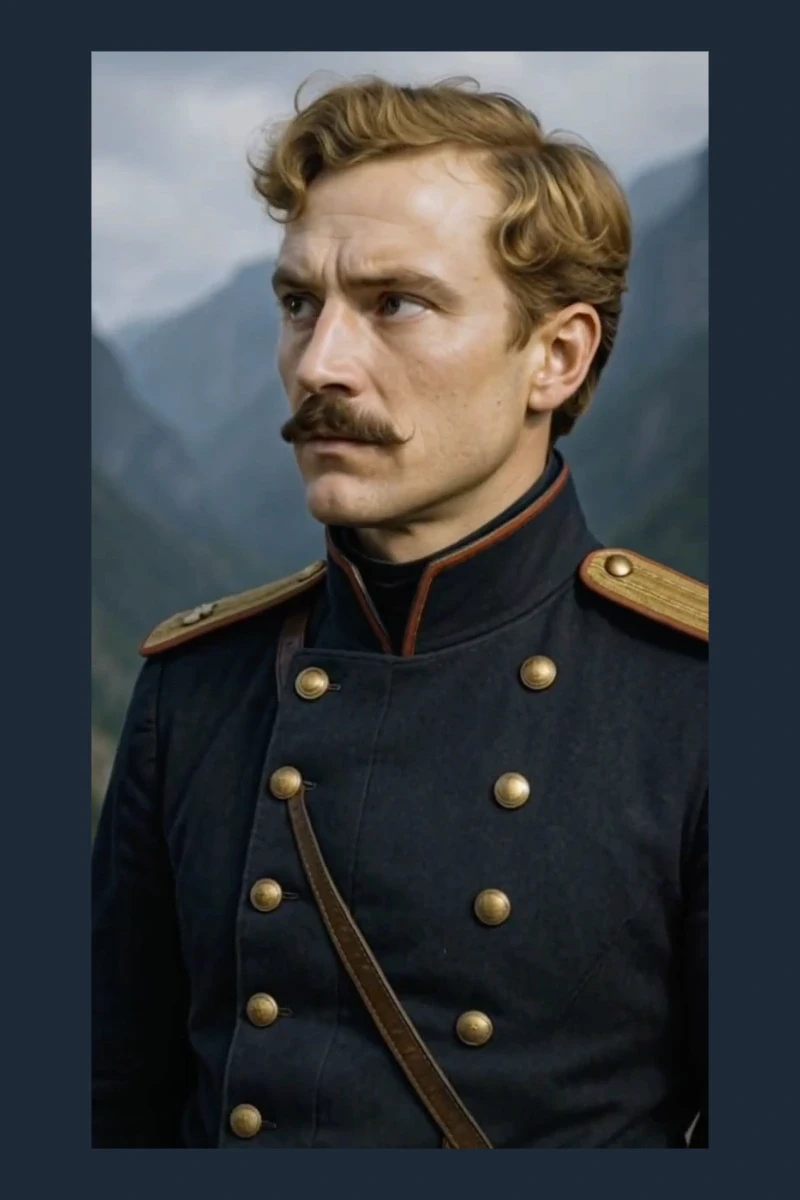
A Hero of Our Time follows Grigory Pechorin, a disillusioned Russian officer navigating the complexities of 19th-century society with cynicism and moral ambiguity. Through a fragmented narrative structure—presented as interconnected stories told by various narrators—the novel reveals Pechorin's manipulative nature, romantic entanglements, and existential ennui. Set against the backdrop of the Caucasus during Russia's imperial expansion, the work explores themes of alienation, the corruption of idealism, and the psychological torment of a brilliant but morally compromised protagonist. Pechorin seduces, deceives, and destroys those around him while remaining trapped in his own spiritual emptiness. The novel's innovative narrative technique—moving backward and forward in time—mirrors the protagonist's fragmented consciousness and unreliable perspective. A groundbreaking work of psychological realism, it examines the "superfluous man" archetype: an intelligent, capable individual rendered useless by society's constraints and his own inner contradictions. The story challenges readers to sympathize with an antihero whose charm masks profound spiritual corruption, making it a precursor to modern literary fiction.