
Age: 74
male
Parker Stevenson (born Richard Stevenson Parker, Jr) is an American television and film actor. Stevenson's first notable screen appearance was a starring role in the 1972 movie A Separate Peace, credited as Parker Stevenson. After graduating from Brooks School and Princeton University, where he studied architecture, he moved to Hollywood and landed a role opposite Sam Elliott in the 1976 film Lifeguard. Stevenson became well known from starring with teen heartthrob Shaun Cassidy in The Hardy Boys/Nancy Drew Mysteries series, produced by Glen A. Larson's production company through MCA-Universal Television (now NBCUniversal) under license from the Stratemeyer Publication Syndicate , from 1977 to 1979 on ABC. In 1983, he co-starred in the movie Stroker Ace as Burt Reynolds's brash race-car driving nemesis, Aubrey James. The film was a critical and financial failure. In 1986, Stevenson starred as Billy Hazard in the television miniseries North and South: Book II. He co-starred with his then-wife Kirstie Alley, who portrayed his sister Virgilia Hazard. He starred on the short-lived 1988 TV series Probe in the lead role of Austin James. He was part of the original cast of Baywatch in the 1989 season, returning for the syndicated 1997 and 1998 seasons. He had a recurring role as a computer tycoon on Melrose Place during the second season. He starred in Legion. In 2014 he had a guest role on the Western/Mystery series Longmire. Stevenson has been a photographer since he was young; his work can be found at his photography website, shadowworks. He currently stars on Greenhouse Academy on Netflix (2017-current) as Louis Osmond, Academy Director. Description above from the Wikipedia article Parker Stevenson, licensed under CC-BY-SA, full list of contributors on Wikipedia.
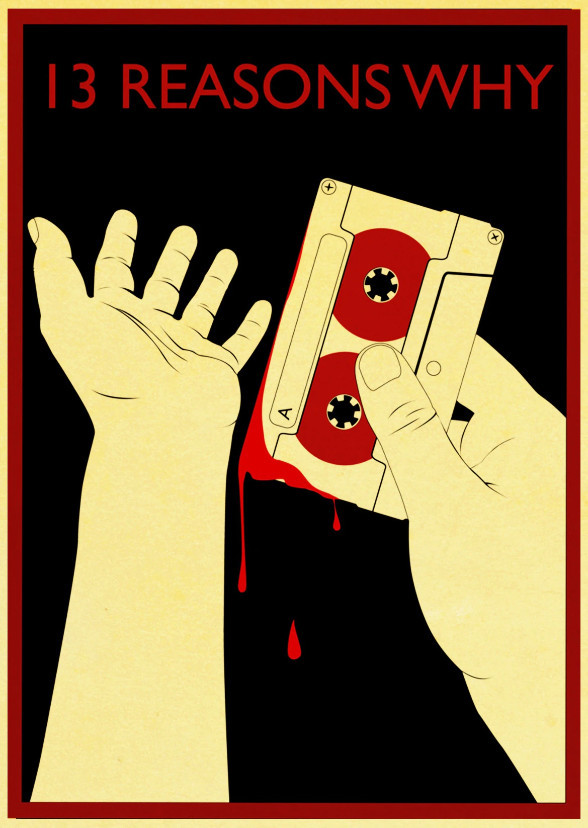
A haunting mystery unfolds when a high school student discovers a series of cassette tapes left behind by a classmate who took her own life. Each tape reveals a different person who played a role in her devastating decision, forcing a tight-knit group of teenagers to confront their cruelty, betrayal, and complicity. Set against the gritty backdrop of 1970s America—with its vinyl records, rotary phones, and analog isolation—the narrative becomes a tense psychological thriller. As the tapes circulate, paranoia and guilt consume the town. The story examines how small acts of unkindness compound into tragedy, while exploring themes of accountability, redemption, and the fragility of adolescent life. Dark, introspective, and deeply human, this version captures the era's raw emotional honesty and moral reckoning.




