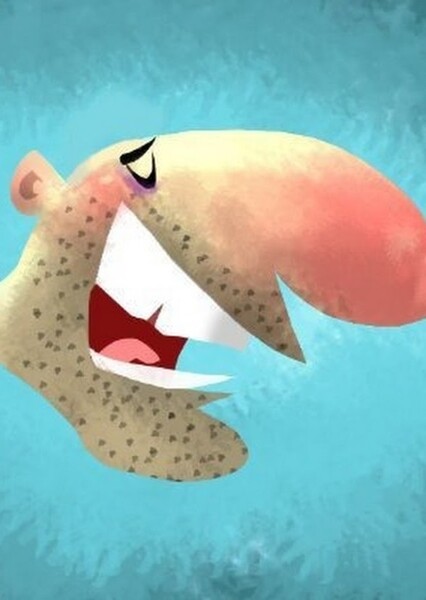
Age: 59
male
British character animator. He was first known for his work on several Walt Disney Animation Studios films, including various characters in Who Framed Roger Rabbit, Rafiki in The Lion King, Belle in Beauty and the Beast, and Quasimodo in The Hunchback of Notre Dame. After Notre Dame, Baxter moved over to DreamWorks Animation, where he worked on films such as The Prince of Egypt, The Road to El Dorado, Spirit: Stallion of the Cimarron, Shrek 2 and Madagascar. Early in 2005, Baxter left DreamWorks and set out on his own as an independent animator. He became the head of his own studio, James Baxter Animation, in Pasadena, California, where he has directed the animation for the 2007 film Enchanted and the opening credits to Kung Fu Panda, for which he received an Annie Award. As of the summer of 2008, James Baxter Animation has closed and Baxter has returned once again to DreamWorks Animation as a supervising animator. Baxter has also worked on Tummy Trouble, How to Train Your Dragon and The Croods. In May 2013, Baxter was a guest animator for an episode of Adventure Time entitled "James Baxter the Horse".The episode's story focused on the lead characters trying to emulate a horse who can cheer everyone up by neighing his name (James Baxter) and balancing on a beach ball. Both the horse's animation (which is visually distinct from the other characters) and voice were provided by Baxter. The episode's title card features a drawing of the horse drawing a horse on a beach ball, while sitting at an animation table. -Wikipedia
James Baxter

Animation by
for Animation by in 𝐂𝐚𝐥𝐯𝐢𝐧 𝐚𝐧𝐝 𝐇𝐨𝐛𝐛𝐞𝐬
Suggested by demurelyhydrated
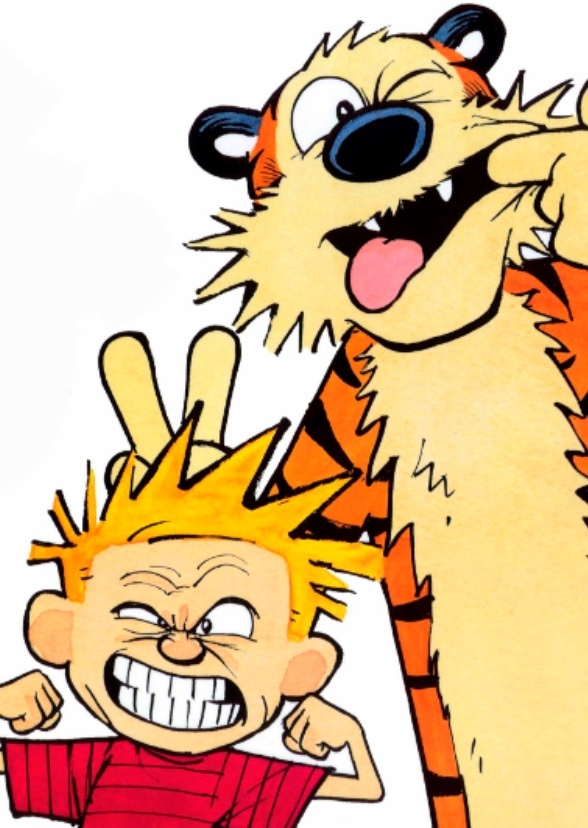
Calvin and Hobbes follows the humorous antics of the title characters: Calvin, a mischievous and adventurous six-year-old boy; and his friend Hobbes, a stuffed tiger. Set in the suburban United States of the 1980s and 1990s, the strip depicts Calvin's frequent flights of fancy and friendship with Hobbes. It also examines Calvin's relationships with his long-suffering parents and with his classmates, especially his neighbor Susie Derkins. Hobbes's dual nature is a defining motif for the strip: to Calvin, Hobbes is a living anthropomorphic tiger, while all the other characters seem to see Hobbes as an inanimate stuffed toy, though Watterson has not clarified exactly how Hobbes is perceived by others, or whether he is real or an imaginary friend. Though the series does not frequently mention specific political figures or ongoing events, it does explore broad issues like environmentalism, public education, and philosophical quandaries. At the height of its popularity, Calvin and Hobbes was featured in over 2,400 newspapers worldwide. As of 2010, reruns of the strip appeared in more than 50 countries, and nearly 45 million copies of the Calvin and Hobbes books had been sold worldwide.